
Crop conditions across Farmward territory continue to look strong, but the conversation is beginning to shift.
For much of the spring, the focus was on planting, emergence, fertility, and weed control. Now, growers are starting to evaluate herbicide performance, monitor disease risk, and prepare for the next round of crop protection decisions.
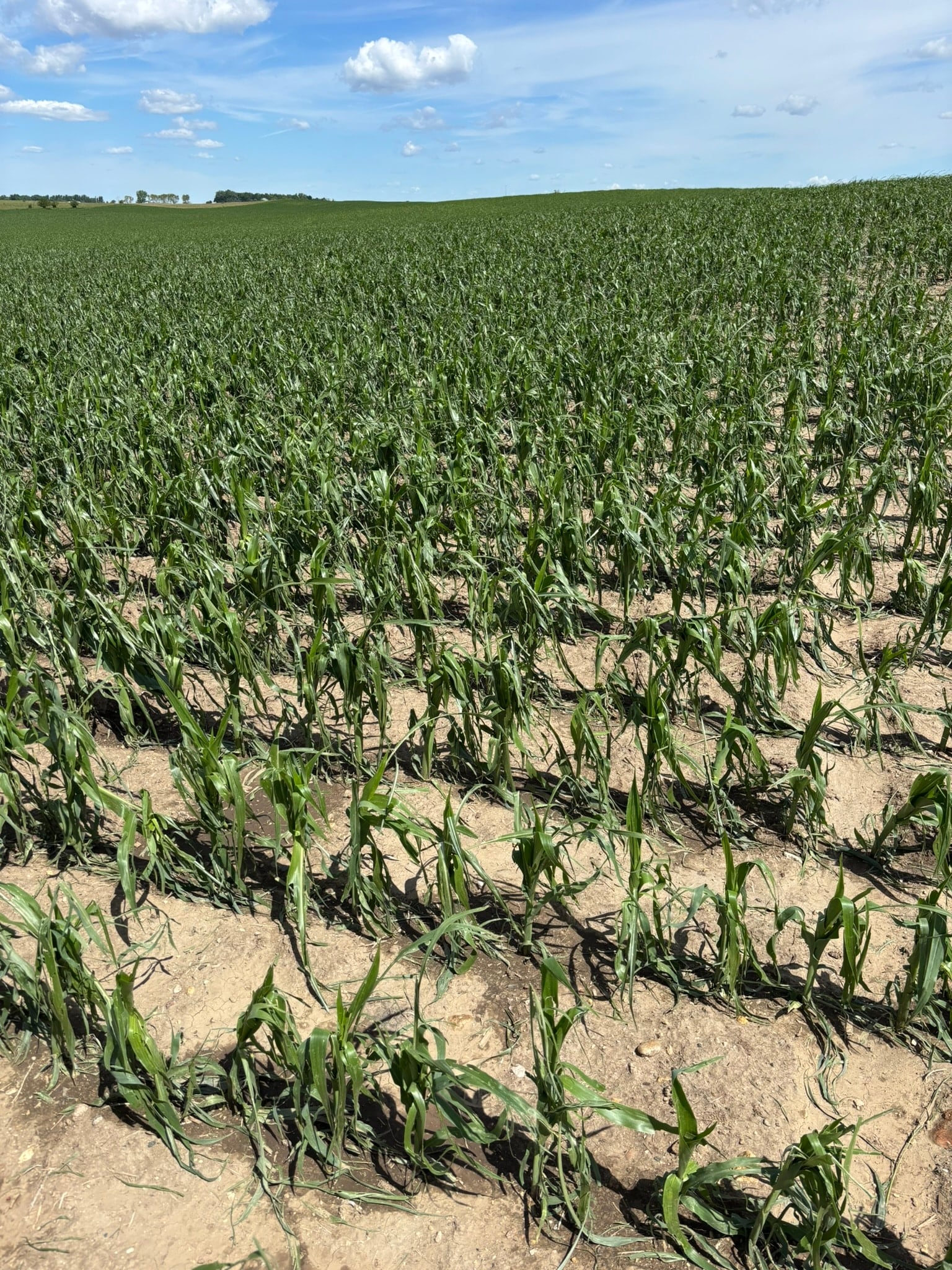
Recent winds, scattered hail, and highly variable rainfall have created different challenges across the region. While most crops continue to look good, these weather events may increase disease pressure as we move deeper into the growing season.
What We’re Seeing Across the Region
Southern Region
Post-emerge applications are largely wrapped up across the southern region, and growers are beginning to evaluate how well those herbicide programs performed.
Some corn fields are requiring cleanup applications where waterhemp and other weeds slipped through earlier programs. In several cases, additional passes with products like Status or Roundup are being used to finish off escapes.
Soybean fields are also approaching the next stage of weed management. Second post-emerge applications will likely begin on some acres next week, particularly where larger waterhemp plants survived the first pass.
Overall, crop conditions look very good.
Many of the earliest planted soybean fields are beginning to flower, while corn across much of the region has reached the V7–V8 growth stages.
Northern Region
Pea harvest officially began over the weekend and will continue to be a major focus over the coming weeks.
Soybean spraying remains very active across the northern region, while only a small amount of corn spraying remains.
Recent wind events have also created concerns around brittle snap and greensnap in some corn fields. Growers are encouraged to scout fields carefully and assess any storm-related damage.
Sugarbeet growers are also preparing for their first Cercospora Leaf Spot (CLS) fungicide applications. Early disease management remains one of the most important steps in protecting sugarbeet yield and quality later in the season.
Additional conversations are beginning around summer lime piling and future soil fertility planning as growers look ahead to post-harvest management decisions.
Western Region
Soybean first-pass spraying is beginning to wrap up across much of the western region.
Most fields look good, but some corn acres are requiring resprays where earlier post applications did not include enough residual activity and waterhemp is beginning to emerge again.
Cooler temperatures this week have slowed crop growth somewhat, while rainfall remains highly variable across the region.
One topic generating increased discussion is disease pressure.
Strong winds, scattered hail, and crop injury can create opportunities for disease development later in the season. As a result, many growers are beginning to evaluate fungicide opportunities in both corn and soybeans.
Recent years have shown strong returns from:
- Tassel-time fungicide applications in corn
- R2–R4 fungicide applications in soybeans
While every field is different, now is the time to start evaluating those opportunities before application windows arrive.
Alfalfa regrowth continues to look excellent, and moisture conditions have positioned many acres for a strong second cutting in the coming weeks.
What This Means for Your Operation
Weed control season is shifting into evaluation mode – Now is the time to identify escapes before they become larger problems.
Disease risk may be increasing – Wind, hail, and crop injury can create opportunities for disease development.
Corn and soybeans are entering important growth stages – Timely crop protection decisions will become increasingly important.
Weather variability continues to create field-by-field differences – Scouting remains critical.
Photo is of this week's hail damaged corn ----->
This Week’s Recommendations
-
Evaluate herbicide performance and identify weed escapes before they become harder to control.
-
Monitor waterhemp pressure in both corn and soybean fields and plan follow-up applications where needed.
-
Begin discussing fungicide strategies for both corn and soybeans before key application windows arrive.
-
Scout fields for hail, wind, brittle snap, or greensnap damage following recent weather events.
-
Continue monitoring crop growth stages as corn approaches reproductive development and soybeans begin flowering.
-
Check alfalfa regrowth and prepare for second cutting opportunities in the weeks ahead.