
The crop has shifted into a new phase across Farmward territory.
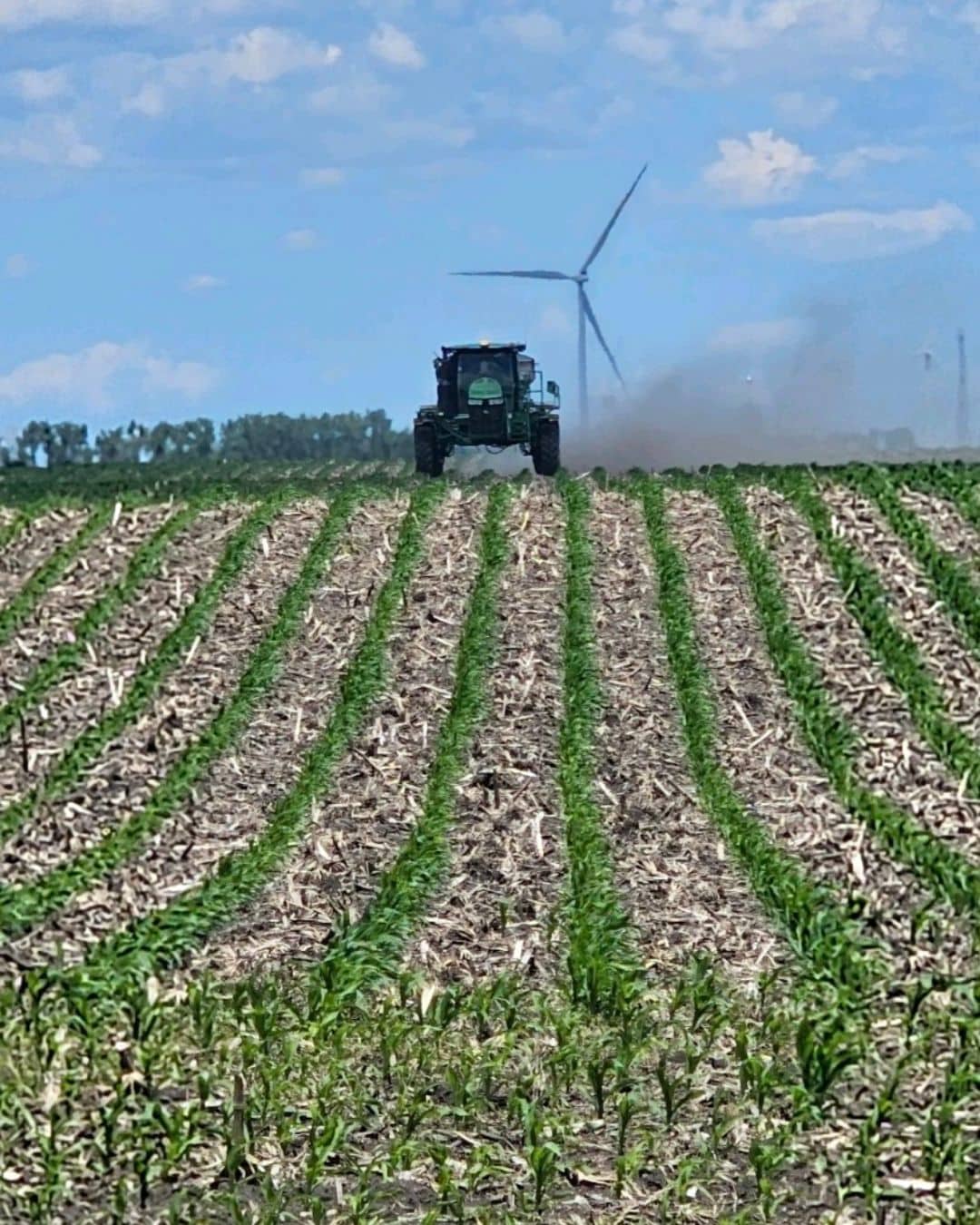
Planting is behind us. Spraying season is in full swing. Growers are starting to consider side-dress nitrogen applications and are making decisions that will directly impact yield potential this fall.
Corn is growing rapidly, soybean spraying is ramping up, and weed pressure continues to be one of the biggest challenges across the region. As residual herbicides begin to wear down, timely post-emerge applications and strong weed control programs are becoming increasingly important.
What We’re Seeing Across the Region
Southern Region
Weed pressure remains the biggest topic of conversation across the southern region.
Many pre-emerge herbicide programs are beginning to wear down, and waterhemp, volunteer corn, and other weeds are starting to emerge across soybean acres.
Soybean spraying is now in full swing, especially on early planted fields. Fields sprayed last week are showing good waterhemp control so far.
One trend that continues to stand out is the difference between incorporated pre-emerge herbicides and products applied after planting. Fields where pre’s were incorporated appear to be holding back weed pressure more effectively.
Corn is growing rapidly, and any fields that have not yet received a post-emerge application should be sprayed soon.
Side-dress nitrogen applications have also begun as growers focus on supporting yield potential during key growth stages.
Northern Region
Agronomy activity continues to ramp up across the northern region.
Peas have begun blooming and are approximately three weeks away from harvest.
As spraying season intensifies, growers are reminded to pay close attention to tank mixes and product compatibility. Even products that appear similar can react differently when mixed together.
A simple jar test can help avoid expensive mistakes before products reach the sprayer.
Trait packages are another important consideration this time of year. Not all corn hybrids can be sprayed with the same herbicides, and growers should verify product compatibility before making applications.
Taking a few extra minutes to confirm product fit can prevent significant crop injury and protect yield potential.
Western Region
This week will be one of the busiest weeks of the season across the western region.
Most corn post-emerge applications are expected to be completed, while soybean spraying has already begun in many areas.
With soybean pre-emerge programs beginning to weaken, growers should start thinking beyond the first post application. Planning now for a potential third pass later in the season can make weed control decisions easier if pressure continues to build.
Corn remains in a critical growth period.
Many fields are entering the V4–V6 growth stages, where a significant portion of yield potential is being determined.
This makes crop health especially important right now.
Growers may want to consider:
- In-season tissue sampling to identify nutrient deficiencies
- Side-dress or top-dress nitrogen applications
- Early season fungicide opportunities
- Continued weed management to reduce competition
Recent moisture and favorable growing conditions should support strong crop development, but maintaining crop health during this stage will be critical.
What This Means for Your Operation
Post-emerge spraying is becoming urgent – Many residual herbicide programs are reaching the end of their effectiveness and we may need to see crop sprayed three times this year
Waterhemp pressure continues to increase – Adding residual products can help extend control
Corn is entering key yield-setting growth stages – Crop health decisions made now can impact fall performance
Nitrogen management is becoming more important – Side-dress and top-dress opportunities are beginning across the region
Herbicide compatibility matters – Verify trait packages and conduct jar tests before mixing products
This Week’s Recommendations
-
Finish post-emerge corn applications before weeds gain additional ground
-
Continue soybean spraying and consider adding residual herbicides for extended control
-
Evaluate side-dress nitrogen opportunities, especially where moisture is available
-
Consider tissue sampling to identify hidden nutrient deficiencies before symptoms appear
-
Verify herbicide compatibility with hybrid trait packages before spraying
-
Perform a jar test anytime you are unsure about tank mix compatibility
-
Start thinking ahead about late-season weed control options if soybean pressure continues to build