
Crops across Farmward territory are finally starting to take off with the recent heat and rainfall.
Corn growth has accelerated quickly over the past week, soybeans are moving along, and spraying season is ramping up fast across all regions. At the same time, weed pressure is increasing quickly as residual herbicide programs begin to wear down.
The next couple of weeks will be critical for staying ahead of weeds, protecting yield potential, and making timely post-emerge applications.
What We’re Seeing Across the Region
Southern Region
Post-emerge spraying has officially begun in many corn fields across the southern region.
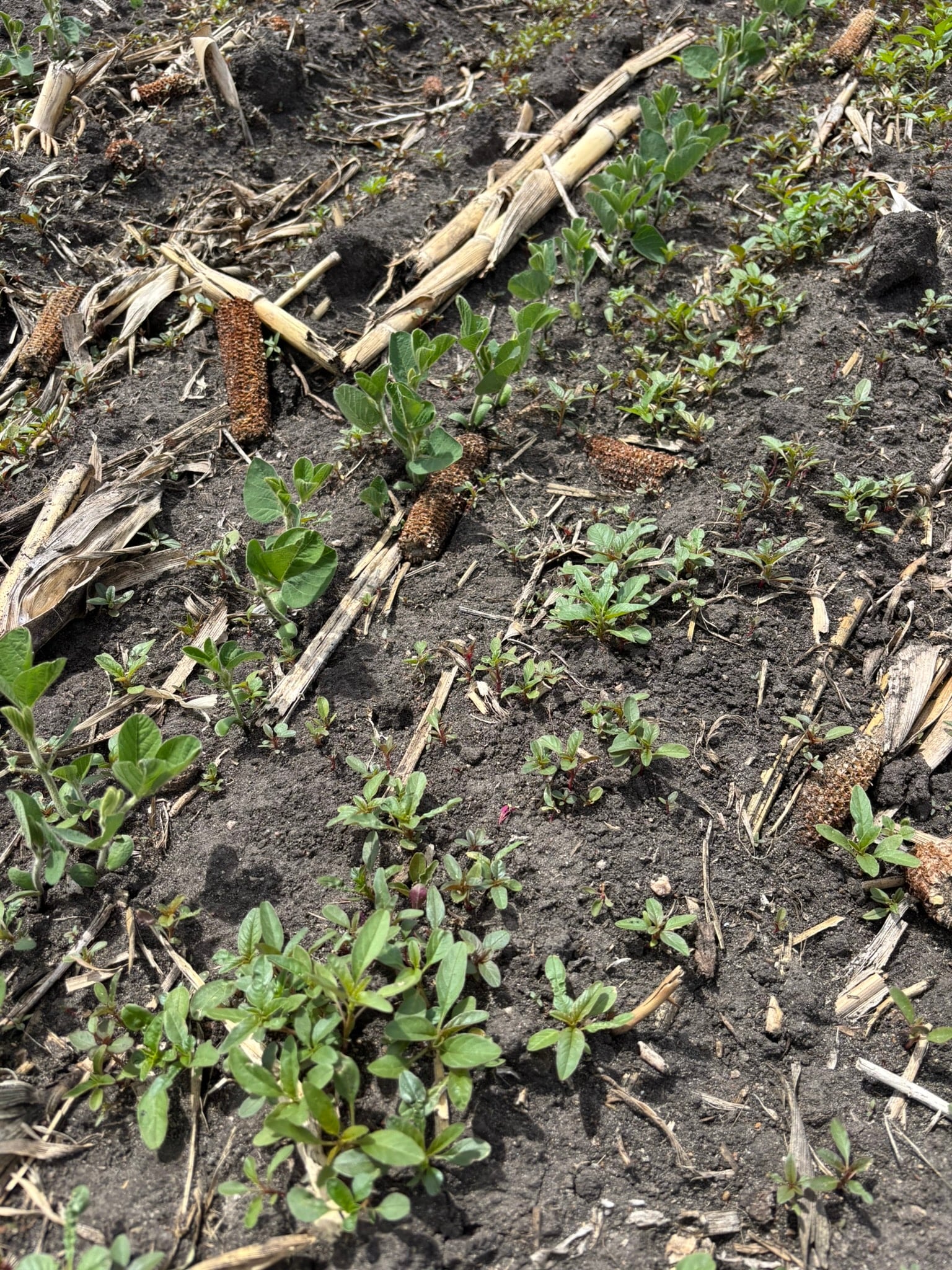
Waterhemp is actively growing, and in some fields weeds have already reached 1–2 inches tall. This is an important reminder that when it comes to waterhemp, earlier is usually better than later.
The goal is simple:
Do not let weeds get ahead of the crop.
Grid sampling for fall fertility planning has also been underway. Getting soil sampling completed now instead of waiting until fall can help spread out workload and improve planning heading into next season.
Corn that experienced some earlier frost stress appears to be recovering well overall.
Northern Region
Second-pass sugarbeet spraying is becoming very busy across the northern region, and corn post-emerge spraying is beginning to ramp up as well.
As growers move deeper into spraying season, tank mixing becomes increasingly important. Many applications now involve complex mixes with multiple products, making proper mixing order critical for product performance and compatibility.
Growers should also pay close attention to:
- Proper adjuvant selection (View Farmward Adjuvants)
- Residual herbicide layering
- Maintaining strong soybean weed programs as pre’s begin to weaken
Top-dress nitrogen planning should also begin soon. Corn will close rows faster than many think, limiting application opportunities later.
Western Region
Recent rainfall combined with warmer temperatures has pushed crop growth ahead quickly across the western region.
Unfortunately, weeds are responding just as fast.
Many soybean pre-emerge programs are beginning to break down, and weed pressure is increasing rapidly in some fields. Growers are encouraged to:
- Prepare soybean post applications now
- Strengthen herbicide programs with residuals and multiple modes of action
- Consider planning for a potential third pass later in the season if pressure continues
Corn across much of the region is around the V3 growth stage but remains relatively short due to the cooler spring conditions and tighter internode spacing.
This slower canopy development means fields may remain exposed to weed competition longer than normal.
There are also conversations beginning around:
- V5 fungicide applications (Read about more ways to support your crop at V5)
- Nutrient products like Max-In ZMB
- Supporting corn through stress from earlier frost and cool conditions
Some isolated frost damage was found in low-lying corn acres, although most plants should recover since the growing point remains below ground.
Soybeans overall continue to look good.
Alfalfa conditions are also positive, with first cutting beginning in some fields. Growers should begin scouting cut fields for insect pressure moving into next week.
What This Means for Your Operation
Weeds are accelerating quickly – Residual herbicide programs are beginning to weaken and post timing will matter
Waterhemp control windows are getting tighter – Smaller weeds are easier and cheaper to control
Crop growth is improving – But slower canopy development may extend weed pressure longer than normal
Spray season is entering full swing – Product selection, mixing order, and adjuvants all matter
This Week’s Recommendations
-
Scout fields aggressively for waterhemp and emerging weed pressure
-
Do not delay post-emerge applications – Especially in soybean acres where pre’s are breaking down quickly
-
Review herbicide mixing order and adjuvant recommendations before spraying
-
Begin planning top-dress nitrogen applications before corn growth limits application timing
-
Check cut alfalfa fields for early insect pressure as first crop progresses