
Crop conditions across Farmward territory continue to look solid overall, but attention is quickly shifting toward weed control, post-emerge planning, and evaluating stress from recent weather events.
Cooler temperatures and strong winds over the past week slowed crop progress in some areas, while weeds have continued to move ahead aggressively. Across many regions, pre-emerge herbicide programs are beginning to weaken, making scouting and timely post applications increasingly important.
At the same time, growers are beginning to evaluate stand health, sidedress nitrogen needs, and long-term fertility planning as the season continues to develop.
What We’re Seeing Across the Region
Southern Region
Crop stands across the southern region continue to look strong overall, with only isolated issues in areas where planting was pushed shortly after rainfall or ahead of colder weather.
The biggest focus right now is weed pressure.
Many early planted corn and soybean fields are now about a month removed from their pre-emerge herbicide application, and weeds are beginning to break through—especially in minimal tillage fields and around field edges.
Now is a good time to:
- Start planning post-emerge applications
- Clean up line fences and field edges
- Scout fields for early weed escapes
Moisture levels still appear decent near the seedbed, although growers would still welcome additional rainfall moving forward.
Northern Region
Sugarbeet activity remains busy across the northern region, with some acres being replanted or spiked in following damage from recent wind events.
Sugarbeet spraying has also begun and will continue to be a major focus over the next couple of weeks.
Corn and soybean fields are beginning to reach the point where pre-emerge herbicide programs are starting to weaken, meaning growers should begin scouting now ahead of post-emerge spraying next week.
Some concern also exists around frost damage from recent cold temperatures, particularly in soybeans and sugarbeets. At this point, most damage appears minimal, but growers are encouraged to:
- Flag questionable areas
- Wait 4–5 days
- Reevaluate stands before making decisions
Edible bean planting has also begun across parts of the region.
Growers may also want to begin evaluating whether additional sidedress nitrogen could be needed later this season depending on rainfall and crop conditions.
Western Region
Rainfall totals across the western region were lighter than expected over the weekend, and in areas where pre-emerge herbicides did not receive activation rainfall, weed pressure is beginning to increase quickly.
Post-emerge spraying in corn could begin within the next 7–10 days in many fields.
With cooler weather slowing crop growth but weeds continuing to develop, growers are encouraged to strengthen post programs by considering:
- Multiple modes of action
- Residual herbicides
- Proper adjuvant selection
- Stronger herbicide rates where needed
The goal is simple:
Keep fields clean long enough for the crop to reach canopy.
There are also conversations beginning around V5 fungicide applications, especially in fields that may have experienced wind damage from recent sand-blasting conditions. Damaged plants can become more vulnerable to disease pressure later.
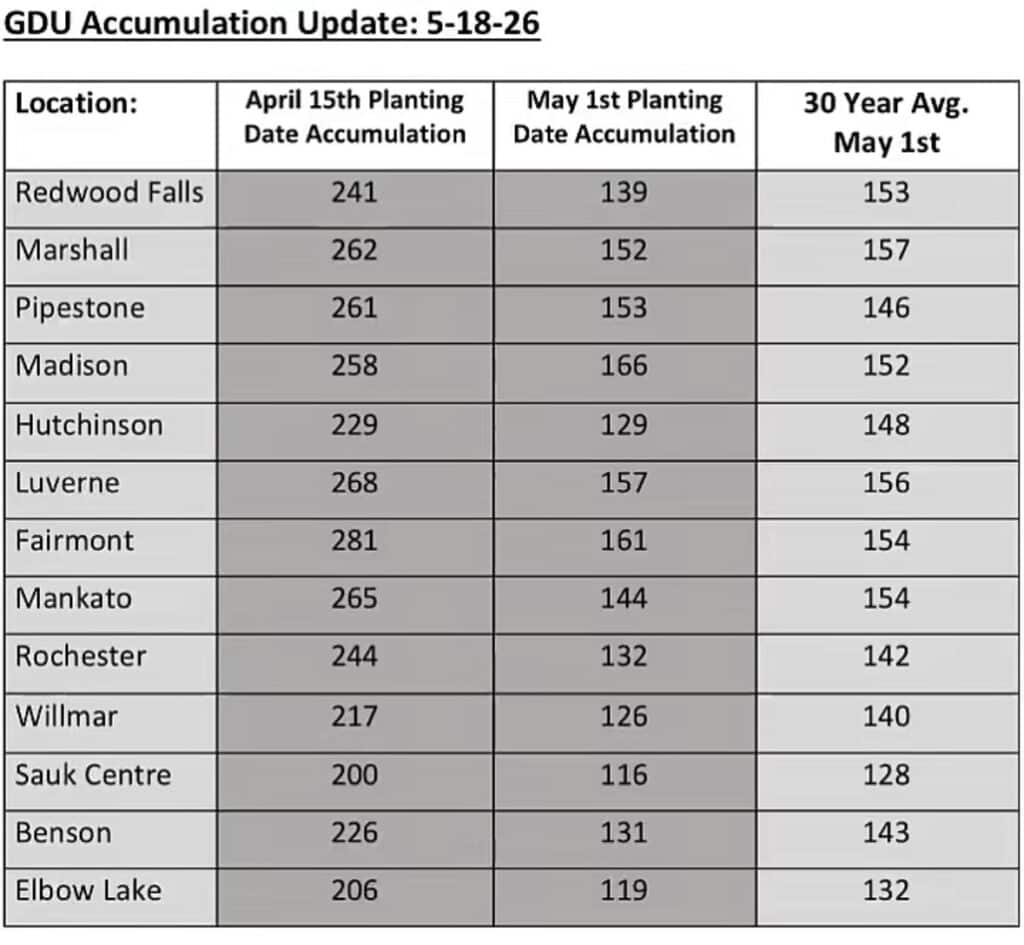
Despite slower Growing Degree Day accumulation compared to average, overall stand counts and emergence continue to look positive across most fields.
Another important topic beginning to surface is soil fertility planning for the 2027 crop year.
With fertilizer prices remaining historically high, in-season soil sampling can help growers better manage fertilizer decisions while protecting long-term yield potential.
What This Means for Your Operation
Weed pressure is beginning to increase rapidly – Especially in fields where pre-emerge herbicides are weakening or never activated properly
Post-emerge season is approaching fast – Now is the time to finalize spray plans with multiple modes of action as well as adjuvants
Cool weather is slowing crop growth – But weeds are continuing to grow aggressively
Field scouting is becoming critical – Early detection of weed escapes, frost concerns, or stand issues creates more management options
This Week’s Recommendations
-
Scout fields now for weed escapes and weakening residual herbicide programs
-
Begin preparing post-emerge herbicide plans – Consider adding residuals and multiple modes of action where needed
-
Evaluate field edges and minimal tillage acres closely – These areas are often the first to show pressure
-
Flag any questionable frost-damaged areas and reassess after 4–5 days before making decisions
-
Start thinking ahead about sidedress nitrogen and future fertility planning as the season progresses