
The crop has officially shifted into “rapid growth mode” across Farmward territory.
Warm temperatures, recent rainfall, and improving soil moisture have pushed both crops and weeds into high gear. Corn is moving quickly through vegetative stages, soybeans are actively being sprayed, and sidedress nitrogen applications are in full swing.
At this stage of the season, the focus is no longer planting.
It’s protecting yield potential.
And that starts with staying ahead of weeds, managing crop nutrition, and making timely in-season decisions.
What We’re Seeing Across the Region
Southern Region
Soybean fields across the southern region are largely through their first post-emerge pass, but weed pressure remains a major concern.
Waterhemp continues to be the primary challenge, with some fields showing escapes exceeding 6 inches in size where spraying was delayed.
At this stage, control becomes more difficult and more expensive, making timely second-pass decisions critical.
In many cases, a second post-emerge application will be needed to fully clean up escapes and maintain control through canopy.
Tank mix programs have shown strong results in many fields, but some visible crop injury (burning) has been observed. Growers are encouraged to continue monitoring results closely as programs are refined.
Corn is also showing scattered weed escapes in some fields, and in several cases, herbicide options are becoming limited due to label timing restrictions.
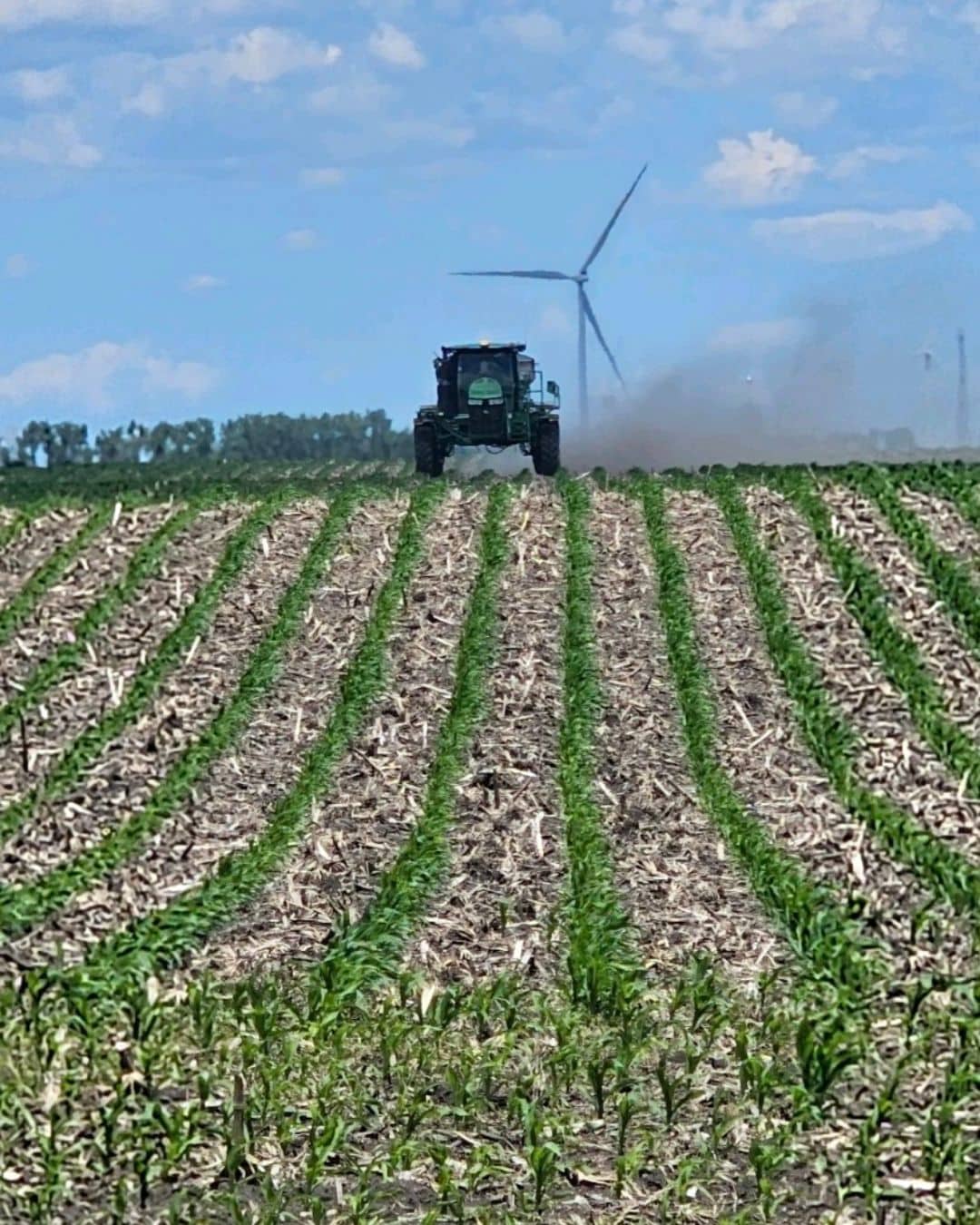
This is also a key sidedress nitrogen window, with applications now moving into full swing.
Corn stages are currently ranging from V5 to V8, and growing degree day accumulation is ahead of normal, meaning crop development is progressing quickly.
Rootworm hatch is also beginning, aligning with typical early summer insect activity patterns.
Northern Region
Corn spraying is beginning to wrap up across the northern region, with soybean spraying now ramping up quickly.
First-round sugarbeet fungicide applications are also underway, marking another key management stage for that crop.
Spotty and unpredictable rainfall has made timing challenging, but the recommendation remains consistent:
Even in fields that look clean, proactive soybean spraying is important to prevent early escapes from becoming season-long problems.
Corn sidedress applications are moving strong across the region as growers focus on supporting early season growth.
Sweet corn planting windows are also opening again across parts of Renville and Redwood counties.
As spraying season intensifies, growers are also being reminded to pay close attention to herbicide rotation restrictions—especially in edible soybean acres—to avoid limitations in next year’s crop rotation planning.
Western Region
Recent rainfall across the western region was very timely and has helped set up strong crop development heading into mid-June.
With heat and moisture continuing, both crops and weeds are growing quickly.
Corn post-emerge spraying is wrapping up, while soybean spraying is now the primary focus across many acres.
A key reminder this week for soybean applications:
Liberty performs best under the right conditions—heat, sunlight, and humidity are all important for consistent performance. As weed size increases, adjuvants and proper tank mix selection become even more critical for effective control.
Growers are also being encouraged to continue including residual herbicides in soybean programs to extend control through the remainder of the season.
Nitrogen applications on corn are also very active right now. As corn transitions into relying more heavily on root uptake, timely nitrogen applications become critical to support yield potential before canopy closure.
Alfalfa first cutting is mostly complete. Overall yields were strong, but now is a good time to:
- Apply fertilizer where needed
- Scout for insect pressure in regrowth
What This Means for Your Operation
Crop growth is accelerating quickly – Corn and soybeans are moving through key vegetative stages
Weed pressure is increasing at the same pace – Especially waterhemp and late-emerging escapes
Spray timing is critical right now – Delays are increasing control difficulty and cost
Nitrogen applications are time-sensitive – Corn is actively entering high-demand growth stages
In-season decisions are now yield decisions – What happens in the next 2–3 weeks matters
This Week’s Recommendations
-
Complete soybean post-emerge applications while weeds are still small and controllable
-
Include residual herbicides and proper adjuvants to extend control through canopy
-
Finish corn post-emerge applications before crop size limits application options
-
Stay on schedule with sidedress nitrogen applications during peak uptake windows
-
Monitor fields closely for weed escapes, especially waterhemp in southern regions
-
Use appropriate herbicide timing and rotation restrictions to protect future crop options
-
Scout alfalfa regrowth for insect pressure following first cutting